 English
 Français
Incontinent Pad

Your trusted medical supplies manufacturer.
No. 10 Ousheng Avenue, Pingwang Town, Wujiang District, Suzhou City, Jiangsu Province, China
+86 133 5801 3454
jasonzhangcas@gmail.com
MAKE A REQUEST
Product Categories
- Jumbo Raw Material Roll
- Wig Tape
- Wound Dressing
- Medical Tape
- Electrode Pad
- Postoperative Nutrition
- Postoperative Excretion
- Rehabilitation Braces
- First Aid Kit
- Medical Cotton Products
- Medical Gauze
- Bandages
- Patient Transfer
- Hospital Furniture
- Labour Safety
- Daily Homecare
- Medical Diagnose
- Hot&Cold Therapy
-
Body Patch
- Double Eyelid Sticker
- Eyelash Extension Patch
- Amblyopia Patch
- Acne Pimple Patch
- Facial Tape
- Wrinkle Tape
- Nasal Strip
- Mouth Tape
- Waterproof Ear Sticker
- Neck Wrinkle Patch
- Breast Care
- Underarm Pad
- I.V. Dressing
- Catheter Fixation Patch
- Scar Tape
- Wound Closure
- Waterproof Swimming Patch
- Thigh Patch
- Foot Care
- Clothes Sticker
Incontinent Pad Manufacturers
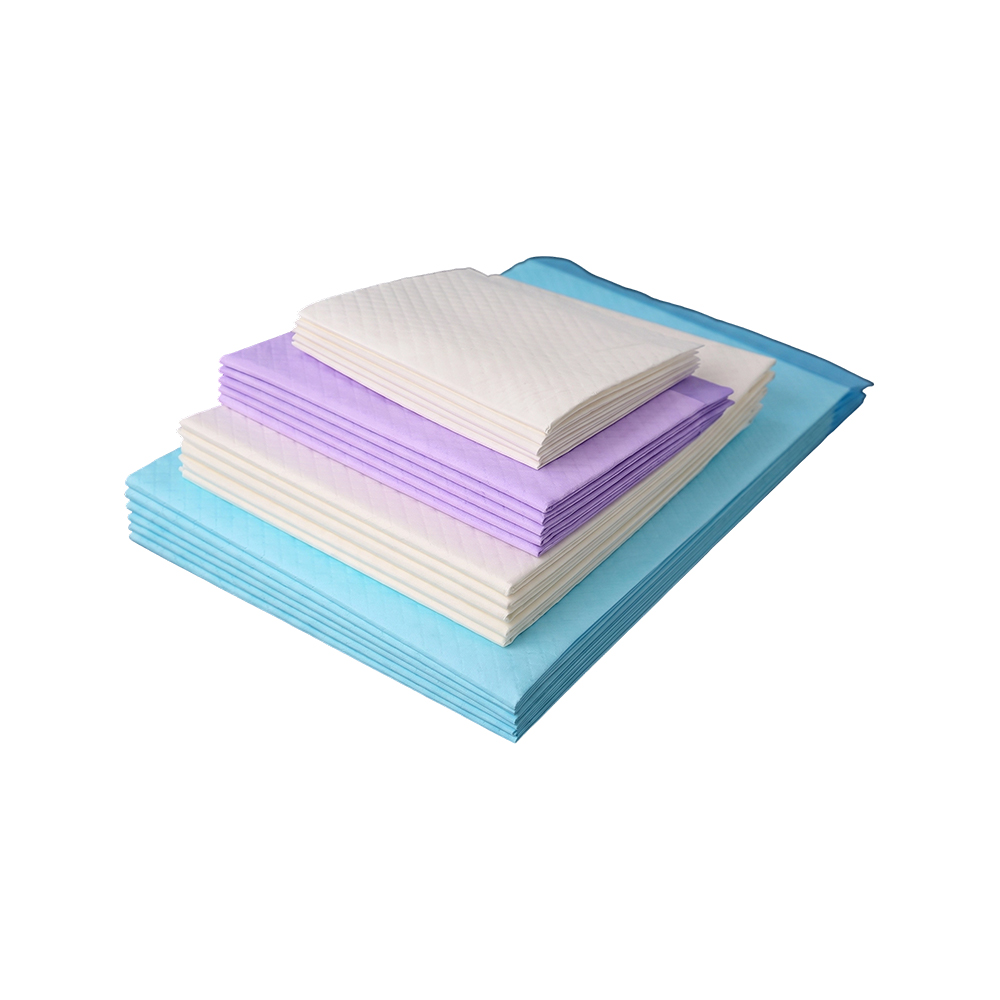
Incontinence Pad is specialized absorbent products designed to treat bladder leakage and urinary incontinence. Unlike sanitary napkins, they are specially designed to handle the rapid flow and thin texture of urine. They typically employ advanced core technologies to lock in moisture and neutralize odors for up to 12 hours.
Our Advantages
-
 1. Rich experienceWe are the professional manufacturer of medical equipment with more than 20 years experience, major in Incontinent Pad and other products.
 -
 2. Ample production capacityCurrently, we have 3 factories, capable of meeting both large and small customer orders.
 -
 3. Diverse product rangeWe have more than 200 kinds of SKU medical equipments.
 -
 4. Global market reachWe have exported our Incontinent Pad products to over 60 countries worldwide, including key markets in Europe, Southeast Asia, Africa and Oceania.
 -
 5. High-quality client resourcesOur markets include more than 100 hospitals, first-aid suppliers, supermarkets and retail sports shops. We have cooperated with well-known domestic and international businesses for many years.
 -
 6. Strong customization capabilityMore than 10 professional technicians, provide perfect ODM services.
 -
 7.Complete team supportProfessional R&D team, quality inspection team, sales team, and comprehensive after-sales service.
 -
 8. Flexible order termsLower MOQ, flexible ODM&OEM process.
 -
 9. Efficient customer serviceRapidly response rate and can quickly and promptly resolve customer issues.
 -
 10. Integrated supply chainComplete Supply Chain: From materials to finished Incontinent Pad products, everything is handled in our factory, not only ensuring quality, but more importantly, the new designs will not be leaked.
 -
 11. On-time deliveryDelivery is punctual, and we can deliver on time even during peak seasons.
Company
Suzhou Advan Medical Technology Co., Ltd.
ADVAN Medical (Suzhou Advan Medical Technology CO., LTD) is leading China Incontinent Pad manufacturers and OEM/ODM Incontinent Pad factory, the pioneering enterprise of ADVAN Group, has been a global leader in Medical industry, specializing in high-quality medical equipment and consumables since its establishment in 2003.
With 20+ years of experience in medical manufacturer and exporter, we specialize in first-aid, wound dressing, sport bandages, family healthcare and medical supply(such as gauze, bandages, cotton, medical tape and non-woven products). We have exported our products to 60+ countries worldwide, including Southeast Asia, Africa, Middle-east, Eastern Europe, Russia, South America and Oceania. Our customers include hospitals, first-aid suppliers, medical distributors and retailer shops.
In 2010, we established our first-aid factory to meet the demands of our customers. In 2018, to accommodate our growing requirements, we established our factory of kinesiology tape, cohesive bandages and elastic adhesive bandages. ADVAN Medical boasts a professional quality control team comprising hundreds of personnel who rigorously adhere to inspection procedures to ensure our products meet ISO13485:2016 standards. Most of our products are CE certified, and our Suzhou factories comply with FDA requirements.
With 20+ years of professional knowledge, skills, and dedicated team, we are committed to ensuring easy and fruitful cooperation and communication. We strive to satisfy your product needs and establish long-term cooperative relationships.
News
-
Self-adhesive electrode pads are the silent workhorses behind every TENS, EMS, and muscle-stimulation session. They deliver the low-voltage pulses that relieve pain, relax tight muscles, and speed up recovery, but only when the pad stays sticky and conducts evenly. With each use, the conductive hydrogel picks up skin ...
READ MORE -
A foam dressing is a soft, cushioning wound cover made from medical-grade polyurethane foam. It is designed to absorb exudate, keep the wound bed moist, and protect the healing area from friction and contamination. Because of its versatility, healthcare professionals rely on foam dressings for a wide range of acute an...
READ MORE -
Managing a wound at home means more than just placing a clean pad over it. The way a dressing fits can determine how quickly the wound heals and whether complications appear. One of the most common problems is a dressing applied too tightly. When a bandage squeezes the wound or the surrounding limb, it can reduce bloo...
READ MORE
Incontinent Pad Industry knowledge
Incontinent Pad Manufacturers for Postoperative and Long-Term Care Programs
As a Incontinent Pad Manufacturers, we match product configuration to the application, operating limits, interfaces and acceptance criteria defined for each project.
Suzhou Advan Medical Technology Co., Ltd. manufactures disposable incontinence under pads for hospitals, medical distributors, first-aid suppliers and retailer shops. As a China Incontinent Pad manufacturer, we build the absorbent core, backsheet, acquisition layer and packaging as one controlled supply chain, so the pad that reaches your ward behaves the same way in every carton.
Incontinence pads are not scaled-up sanitary napkins. Urine releases quickly and has low viscosity, so the core must acquire fluid fast, lock it away and control odor across a full shift. Our range is engineered around that duty cycle, from thin transfer pads for chair and trolley protection to high-capacity bed pads for overnight and postoperative use.
Our Incontinent Pad Range and Where Each Type Fits
We supply disposable incontinence under pads in the formats most requested by care and clinical buyers. Each format is defined by absorbency class, size, backing and fixation, not by a single generic specification.
| Pad Type | Typical Construction | Application Fit |
|---|---|---|
| Light transfer pad | Thin core, soft non-woven top, PE backsheet | Chair, trolley and examination surface protection |
| Standard bed pad | Fluff pulp and SAP core, tissue wrap, PE backing | General ward and home care, daytime changes |
| High-absorbency pad | Dense SAP blend, multi-layer acquisition, odor control | Overnight, postoperative and low-mobility patients |
| Adhesive-fixed pad | Positioning adhesive strips on the backsheet | Active patients and moving beds where pads shift |
| Winged / tuck-in pad | Side wings or tuck flaps, reinforced edges | Bed frames and mattresses requiring wrap fixation |
Materials and Core Engineering
Pad performance is decided by how the layers work together. We select the topsheet for skin contact and rewet behavior, the acquisition layer for strike-through speed, and the superabsorbent polymer blend for retention under pressure. Backsheet choice then controls leakage and breathability.
- Topsheet: hydrophilic non-woven, soft and low-lint for prolonged skin contact.
- Acquisition layer: controls the fast urine surge so the core absorbs instead of pooling.
- Absorbent core: fluff pulp with SAP, or SAP-dominant cores for thinner high-capacity pads.
- Backsheet: PE film or breathable film, plain or embossed, with optional adhesive zones.
- Odor control: core chemistry and pH management to reduce ammonia build-up between changes.
Because we also produce Jumbo Raw Material Roll stock, adhesive and backing materials are controlled upstream of pad converting. That matters when a hospital standardizes on one pad specification across several purchasing cycles.
Critical Specifications We Confirm Before Production
A pad specification is only useful if it is measurable. Our proposals state the values that drive clinical performance and cost, and we hold them through in-process checks and finished-goods inspection.
- Dimensions: pad length and width, plus core dimensions, with tolerance.
- Absorbency: free swell and retention under load, expressed in grams or milliliters.
- Rewet: fluid returned to the topsheet under applied pressure.
- Strike-through time: seconds to absorb a defined volume.
- Backsheet integrity: no leakage under static and dynamic load.
- Adhesive peel: where positioning strips are specified.
- Weight and thickness: linked to absorbency class and carton cube.
- Sterility status: non-sterile as standard, with clean production and controlled bioburden.
Configuration Options for OEM and ODM Programs
We run OEM and ODM programs for distributors and care brands that need their own specification rather than a catalogue item. Configuration is agreed at sampling stage and locked before mass production.
- Size, shape and absorbency class, including thin high-capacity constructions.
- Topsheet texture, color and print, including Pantone-matched options.
- Backsheet color, embossing and wetness-indicator printing.
- Adhesive positioning strips, wings or tuck-in flaps.
- Fold pattern: single fold, tri-fold or flat pack for dispensing.
- Bag count, polybag or flow wrap, and carton configuration.
- Private-label printing, barcodes and multilingual labelling.
Production, Quality Control and Compliance
Pads are converted in a controlled environment with coating, rewinding, cutting and packaging handled in-house. Our quality control team works to ISO 13485:2016 procedures, and our Suzhou factories comply with FDA requirements. Most of our products are CE certified, and we prepare the technical documentation that supports registration in your target market.
Routine checks cover raw material incoming inspection, core weight, dimensional control, absorbency and rewet testing, seal strength and packaging integrity. Sample retention and traceability allow us to trace a finished carton back to its material batch.
Related Products in Our Postoperative Excretion Range
Incontinence pads are usually ordered alongside other postoperative excretion and wound care items. We supply these from the same production and documentation system, which simplifies incoming inspection and reduces the number of suppliers on a hospital tender.
- Wound Dressing for postoperative wound management and exudate control.
- Medical Tape for fixation of dressings, tubing and positioning devices.
- Sterile Wound Dressing where a sterile field is required.
Information We Use to Configure Your Solution
We prepare a pad specification and quotation from the working conditions of your care setting, not from a generic price list. The following inputs let us match absorbency, size and packaging to your actual usage.
| Project Input | Why We Need It |
|---|---|
| Patient profile and mobility | Sets absorbency class and whether adhesive or tuck-in fixation is needed |
| Change interval and shift pattern | Defines retention target and odor control requirement |
| Bed, chair or trolley dimensions | Fixes pad and core size with coverage margin |
| Target market and registration route | Determines documentation, labelling and compliance evidence |
| Packaging and brand artwork | Sets bag count, carton cube, printing and MOQ |
| Annual volume and delivery schedule | Plans production runs and shipment batches |
Sampling, Documentation and Delivery Scope
First samples are typically ready in 3–7 business days, with 1–3 modification rounds depending on construction and material changes. Sampling confirms absorbency, fit, fold pattern and print before tooling and mass production are committed.
Delivery scope is agreed per project: bulk cartons, retail-ready polybags, private-label artwork and mixed container loading. We supply the specification sheet, inspection records and compliance documents that accompany each shipment, and we retain reference samples for traceability.
Frequently Asked Questions
What absorbency classes can you supply for incontinence pads?
We build light transfer pads, standard bed pads and high-absorbency pads with SAP-dominant cores. Absorbency is specified as free swell and retention under load, and we confirm the target against your change interval during sampling.
Can you produce incontinence pads under our own brand?
Yes. We run OEM and ODM programs covering size, absorbency, topsheet and backsheet color, adhesive fixation, fold pattern, bag count and printed artwork. Private-label packaging is produced in the same facility as the pads.
How do you control leakage and odor between changes?
Leakage control comes from the acquisition layer, core retention and backsheet integrity, verified by strike-through and rewet testing. Odor control is managed through core chemistry and pH balance, which we tune to the expected wear time.
What quality documentation accompanies an order?
Production follows ISO 13485:2016 procedures, our Suzhou factories comply with FDA requirements, and most products are CE certified. We provide the specification sheet, inspection records and compliance documents required for your market.
What is the minimum order quantity for custom pads?
MOQ depends on construction and packaging. Standard medical consumables start at 1,000–10,000 units per specification, while Pantone color customization and custom printed packaging carry higher minimums. We confirm the exact figure with the quotation.
Can incontinence pads be ordered together with dressings and tapes?
Yes. Pads, wound dressings, medical tapes and related consumables come from the same manufacturing and documentation system, so a single shipment can cover a ward or tender requirement with consistent paperwork.
Leading wholesale Incontinent Pad manufacturers, including a full range of Wound Dressing, Hydrocolloid Medical Products.


Copyright © 2026 by Suzhou Advan Medical Technology Co., Ltd. All Rights Reserved. This website is intended for regions outside China. Approval No:20240008
