 English
 Français
News
Home / News / Industry News / Chest Seal Patches: Venting Valve vs Non-Vented Designs for Tension Pneumothorax

Your trusted medical supplies manufacturer.
No. 10 Ousheng Avenue, Pingwang Town, Wujiang District, Suzhou City, Jiangsu Province, China
+86 133 5801 3454
jasonzhangcas@gmail.com
Content
An open chest wound that stays open lets air move in and out of the pleural space with every breath. A wound sealed too completely can trap that same air and push the patient toward a tension pneumothorax. Chest seal patches sit exactly on that line. For decades the field answer was petroleum gauze taped on three sides, with the untaped edge acting as a flutter valve. Modern products have split into two families: chest seals with a venting valve or vent channel, and non-vented designs that depend on complete occlusion. The difference changes how air behaves under the patch, how the adhesive holds on bloody skin, and how much reassessment the dressing demands.
Every chest seal has two jobs that pull in opposite directions. The first is occlusion: stopping atmospheric air from entering the pleural cavity during inhalation. The second is escape: letting air that has already entered the pleural space leave instead of building pressure.
When air enters but cannot exit, intrapleural pressure rises with every breath. The lung collapses, the mediastinum shifts, venous return falls, and the patient deteriorates into obstructive shock within minutes.
A dressing that behaves like a one-way valve is the theoretical ideal: it blocks air going in and permits air coming out.
Three-sided taping tried to build that valve from the dressing edge itself. In practice the untaped edge can seal against the skin with blood, sweat, or body weight, and movement during transport changes how it behaves.
One rule applies to every design: no chest seal treats a tension pneumothorax. If tension develops, the seal is lifted and decompression is performed according to protocol.
Vented chest seals create a controlled escape path for air. Two engineering approaches dominate.
A valve design places a thin membrane, duckbill, or slit inside a low-profile housing bonded to the patch. Positive pressure from exhalation or a cough opens the valve and releases air; negative pressure during inhalation closes it. Some units raise the valve inside a dome so it does not sit flat against the skin.
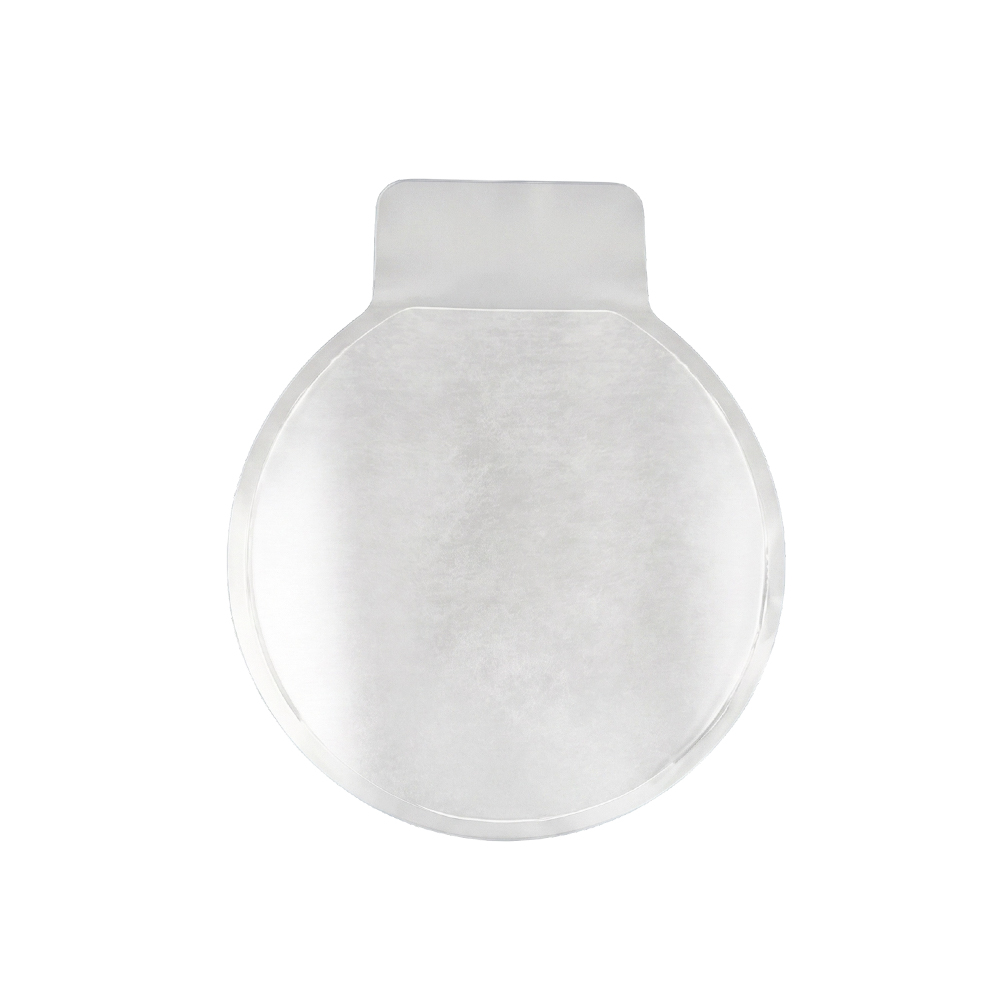 Vented Chest Seal for Open Chest WoundsOne-way vented occlusive dressing designed to release trapped air during exhalation while limiting air entry and pressure buildup in open chest trauma.View Product →
The failure mode is mechanical. Clotted blood or fibrin can hold a valve open or shut, and a valve stuck closed behaves like a fully occlusive dressing.
Instead of a valve, some patches build a controlled leak path into the adhesive layer. Four peripheral openings around an adhesive island, or molded channels running from the wound to the perimeter, let air travel sideways out of the dressing. There are no moving parts to jam and the profile is thinner.
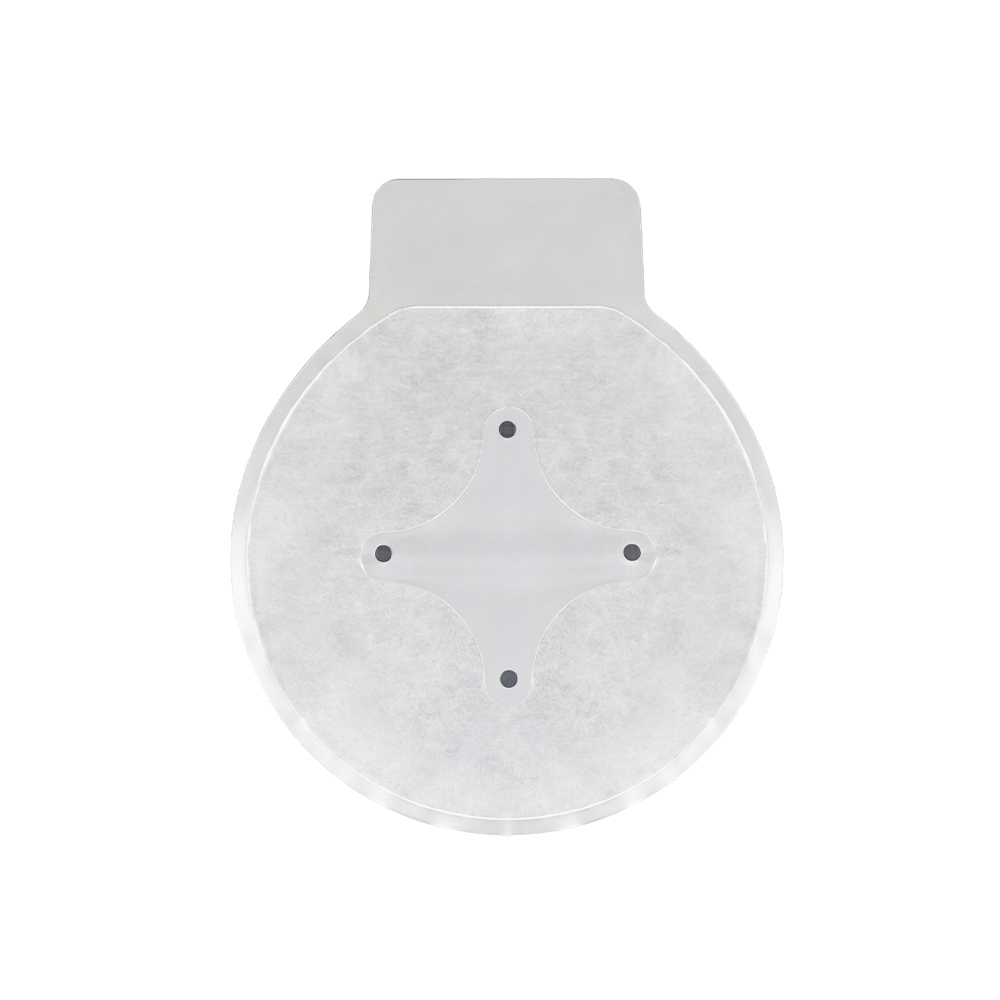 Four-Hole Chest Seal Occlusive Adhesive DressingPassive-venting occlusive dressing with a four-hole design for open chest wounds, intended for basic first aid when professional trauma care is not immediately available.View Product →
Channels have their own weaknesses. Blood can occlude them, a patient lying on the dressing can press the path against a rigid surface, and clothing or a second dressing can cover the openings.
Bench results vary widely because flow depends on vent area, adhesive thickness, and the wound model used. The direction is still useful: a working vent lowers the chance of pressure building under the patch without removing it. Many prehospital and tactical guidelines now prefer vented seals for open chest wounds while noting that clinical evidence remains limited.
A non-vented chest seal is a fully occlusive patch, usually a transparent or foam-backed film coated with a gel, hydrocolloid, or acrylic adhesive. It conforms to irregular contours, holds on sweaty and bloody skin, has no valve to clog, and costs less to produce.
The trade-off is that it cannot release pressure on its own. If the wound or the injured lung keeps leaking air, that air accumulates. Non-vented seals therefore need closer monitoring and a clear plan: reassess for tension, lift a corner if the patient deteriorates, and hand that information over at the next level of care.
Non-vented patches still make sense in short transports with immediate decompression capability, on small wounds with minimal air movement, and wherever a vented product is simply unavailable. In each case the patch is temporary and the patient is not left unobserved.
The table below summarizes how the two families behave in the situations where the choice actually matters.
| Feature | Vented design | Non-vented design |
|---|---|---|
| Air escape path | Valve or vent channels open under pressure | None until the dressing is lifted |
| Tension risk with a perfect seal | Reduced, but not removed | Higher if the wound keeps leaking |
| Seal on blood, sweat, and hair | Depends on adhesive chemistry | Usually the most forgiving |
| Moving parts | Valve membrane or vent channels | None |
| Common failure mode | Clogged valve, compressed or covered vent | Air trapped under the patch |
| Monitoring demand | Confirm the vent stays exposed and patent | Watch for tension and be ready to lift a corner |
| Cost and tooling | Higher, with tighter process control | Lower |
| Typical fit | Prolonged field care, tactical teams, long transport | Short transport with immediate surgical backup |
Most chest seal failures start in the adhesive layer, not in the vent. Gel and hydrocolloid adhesives wet out on moist skin and hold longer under sweat and motion than thin acrylic coatings, and they release with less trauma. Peel force has to be high enough for a secure hold and low enough for removal without tearing fragile skin.
The backing matters too. Polyurethane film gives a low profile and transparency for wound inspection, foam adds cushioning over ribs, and nonwoven backings balance cost against strength.
Vent geometry, adult and pediatric sizing, and packaging all contribute. A sterile peel pouch with a tear notch that opens in low light with wet gloves is a clinical feature. Ethylene oxide sterilization, shelf life validation, and lot traceability belong in the same conversation.
Ask suppliers for bench data rather than marketing language: air evacuation flow, seal retention under simulated sweat and motion, vent patency after blood exposure, and package integrity.
Chest seal selection is a protocol decision first and a purchasing decision second. Standardize on one or two products, train until application is automatic, and keep the instructions for use inside the kit.
Once the design is settled, the supply question becomes consistency. Adhesive lots that vary in tack, vent channels that change shape, and packaging that opens differently between batches all create risk. A published look at how a manufacturer maintains rigorous quality control across medical consumable production is a reasonable starting point for that review.
For distributors, EMS buyers, and first aid kit assemblers, the practical route is often a manufacturer that already produces a full chest sealing patch range alongside the dressings and tapes that travel in the same kit. ODM and OEM arrangements allow private label printing, custom patch sizes, and kit configuration with your own instructions.
Suzhou Advan Medical Technology Co., Ltd. (ADVAN Medical) manufactures chest sealing patches, wound dressings, and first aid kits in Wujiang District, Suzhou, and states that most products are CE marked under a quality system aligned to ISO 13485:2016.
A vented seal includes a valve or vent channels that let trapped air escape under pressure, while a non-vented seal is fully occlusive and holds air under the patch until it is lifted.
It can contribute to one. Complete occlusion stops air from escaping, so any continuing leak raises intrapleural pressure. That is why non-vented patches require close reassessment.
No. A vent reduces the risk of pressure building under the dressing, but tension pneumothorax is still treated by decompression and definitive drainage according to your protocol.
Many prehospital and tactical guidelines favor vented seals for open chest wounds while acknowledging limited clinical evidence. Follow your own protocol and consider transport time.
It stays until the patient reaches definitive care or until it is lifted for decompression. Every seal should be reassessed during transport and handed over clearly.
The vented versus non-vented question has no single winner. A vented chest seal adds a controlled escape path and reduces the pressure risk that fully occlusive dressings carry, at the cost of more parts that can clog or be covered. A non-vented patch offers the most dependable seal on difficult skin and the simplest construction, but it demands active monitoring. What both designs share is that they are temporary measures applied to a patient who must be watched, reassessed, and handed over with a clear description of what was done. Choose the design your team can apply and monitor well, then buy it consistently.
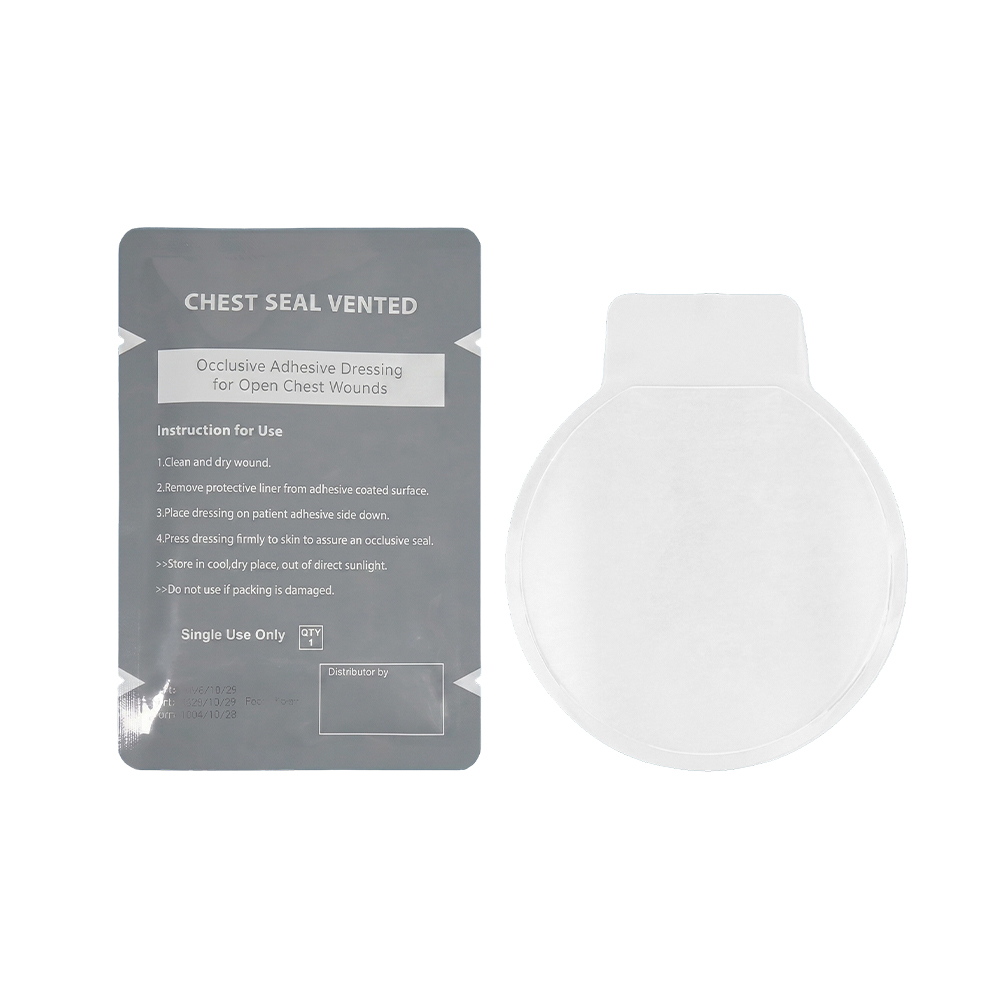 Thoracic Sealant Patch (Chest Seal Vented)
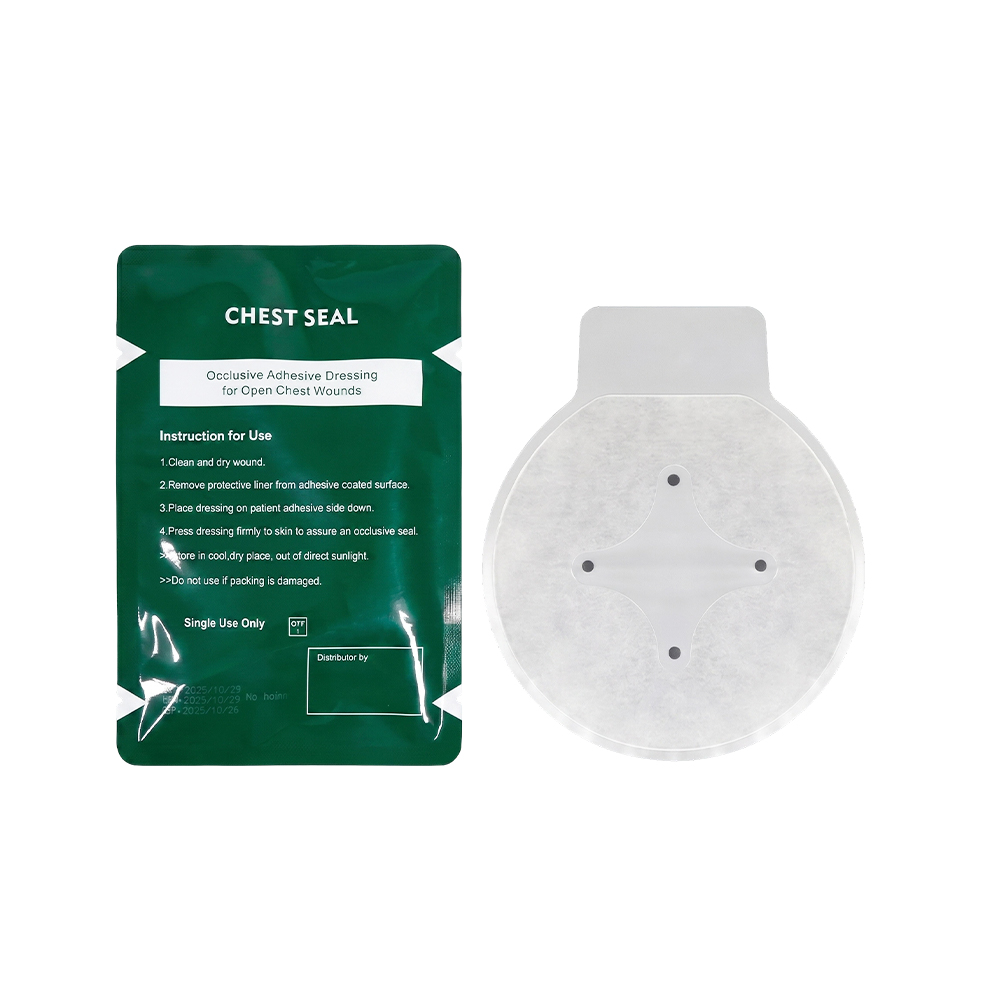 Chest Seal Occlusive Dressing (4-Hole)
 One-Piece Double-Side Non-woven Outer Layer Velcro Seal Ostomy Bag
 1000ml/1500ml/2000ml Sterile Options Medical Grade Non-Toxic PVC Urine Bag without Valve
 One-Piece Single/Double-Side Non-woven Outer Layer Clamp Seal Ostomy Bag
 One-Piece Single-Side Mesh Membrane & Non-Woven Outer Layer Twist-tie Seal Ostomy Bag
Leading custom medical supplies manufacturers, including a full range of Wound Dressing, Hydrocolloid Medical Products.


Copyright © 2026 by Suzhou Advan Medical Technology Co., Ltd. All Rights Reserved. This website is intended for regions outside China. Approval No:20240008

 Previous