English
 Français
News
Home / News / Industry News / How Bordered Silicone Foam Dressings Prevent Sacral and Heel Pressure Injury Breakdown

Your trusted medical supplies manufacturer.
No. 10 Ousheng Avenue, Pingwang Town, Wujiang District, Suzhou City, Jiangsu Province, China
+86 133 5801 3454
jasonzhangcas@gmail.com
Content
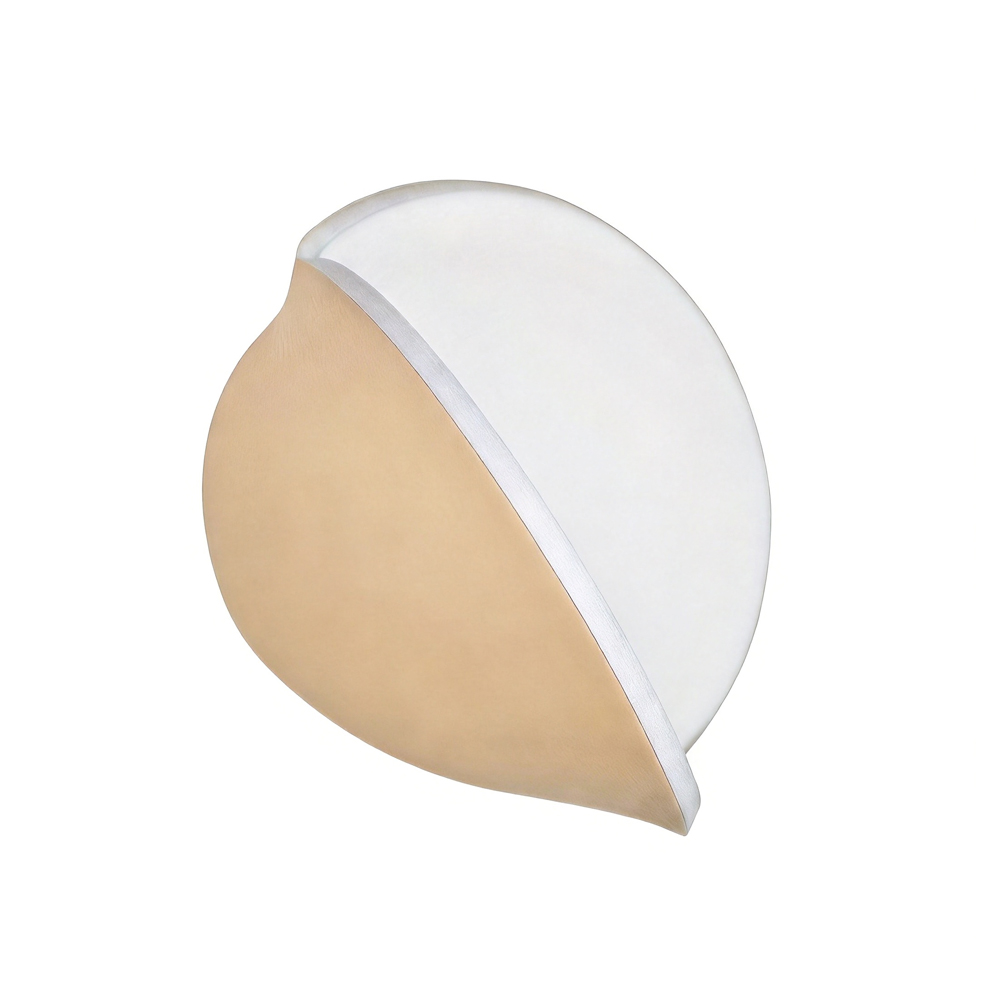
Pressure injuries rarely announce themselves in the wound bed first. Over the sacrum and the heel, the earliest damage usually appears at the perimeter of a dressing: the edge lifts, urine wicks underneath, the patient slides up the bed, and the skin around the wound softens, reddens and begins to break down. A bordered silicone foam dressing is engineered around that perimeter problem. It pairs an absorbent, cushioned foam core with a soft silicone adhesive frame that holds the whole dressing steady while sealing out moisture and shear, so fragile skin is never asked to survive tape, friction and maceration at the same time.
Both sites share an unforgiving combination: a bony prominence close to the skin surface, a thin soft-tissue envelope, and constant mechanical load. That is why they account for a disproportionate share of hospital-acquired pressure injuries.
| Site | Dominant forces | Skin vulnerability | What the dressing must do |
|---|---|---|---|
| Sacrum | Shear, pressure, moisture | Thin skin over the sacral prominence, often macerated by incontinence | Conform to the gluteal cleft, seal the perimeter, resist roll-up |
| Heel | Friction, pressure, offloading load | Small contact area, distal perfusion, repeated friction from sheets | Wrap the curve of the heel, cushion it, stay in place without straps |
Understanding the layers explains why the bordered format behaves so differently from gauze plus tape or a simple film. Each layer solves one failure mode.
If you want a wider overview of the dressing family and where foam sits within it, this guide to what foam dressings are used for covers indications, benefits and the main structural types.
The border is not decoration; it is the part that carries the mechanical load. Its contribution can be summarised in six effects:
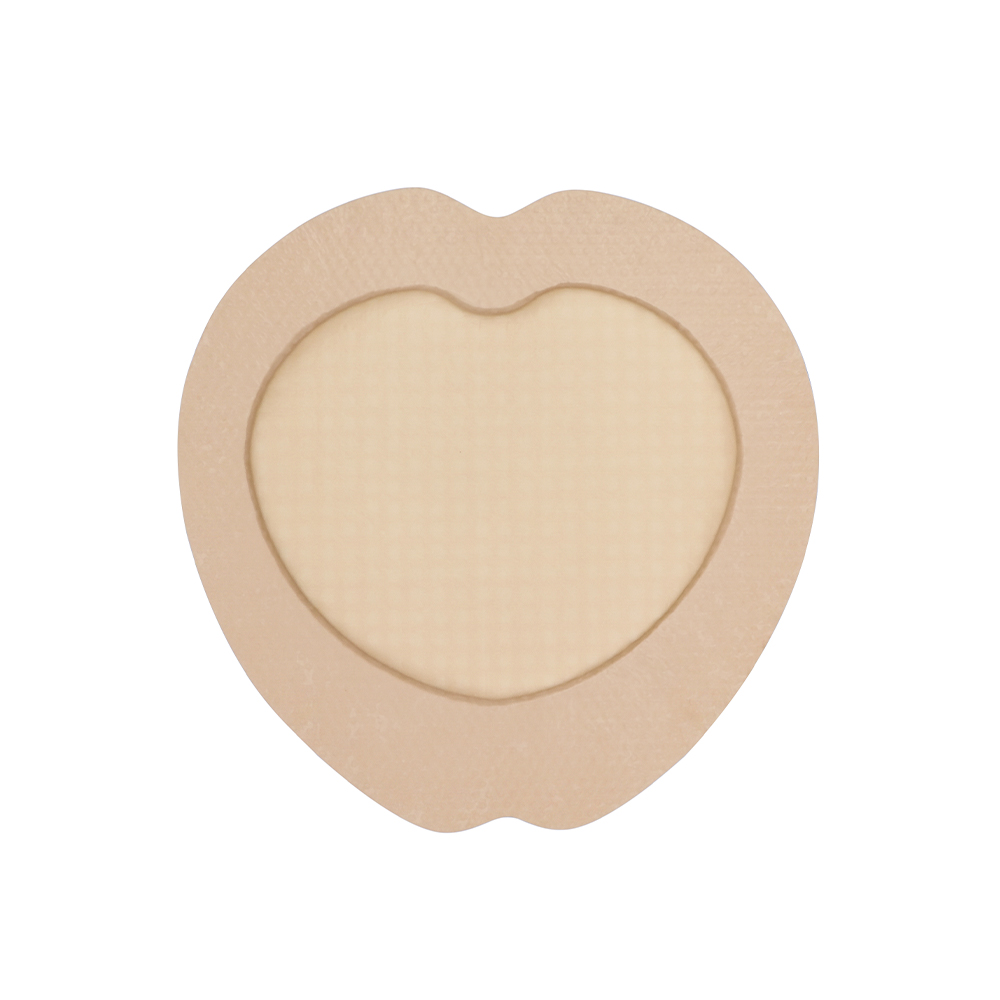
A flat square dressing placed over the sacrum will buckle the moment a patient moves. The gluteal cleft creates a fold, the buttocks curve in two directions, and moisture from incontinence gathers exactly along the lower edge. A heart-shaped sacral dressing is designed to follow that contour: the split at the top of the heart sits over the cleft, while the wider base spreads across the buttocks and seals the area most exposed to soiling.
For a full-thickness or larger sacral wound, a 22.5 x 22.5 cm sacral bordered foam dressing provides enough overlap to anchor on intact skin on all sides while still cushioning the prominence. The dressing should extend two to three centimetres beyond the wound margin, with no tension and no creases. If the wound extends into the cleft itself, packing or a contact layer can be used beneath the foam.
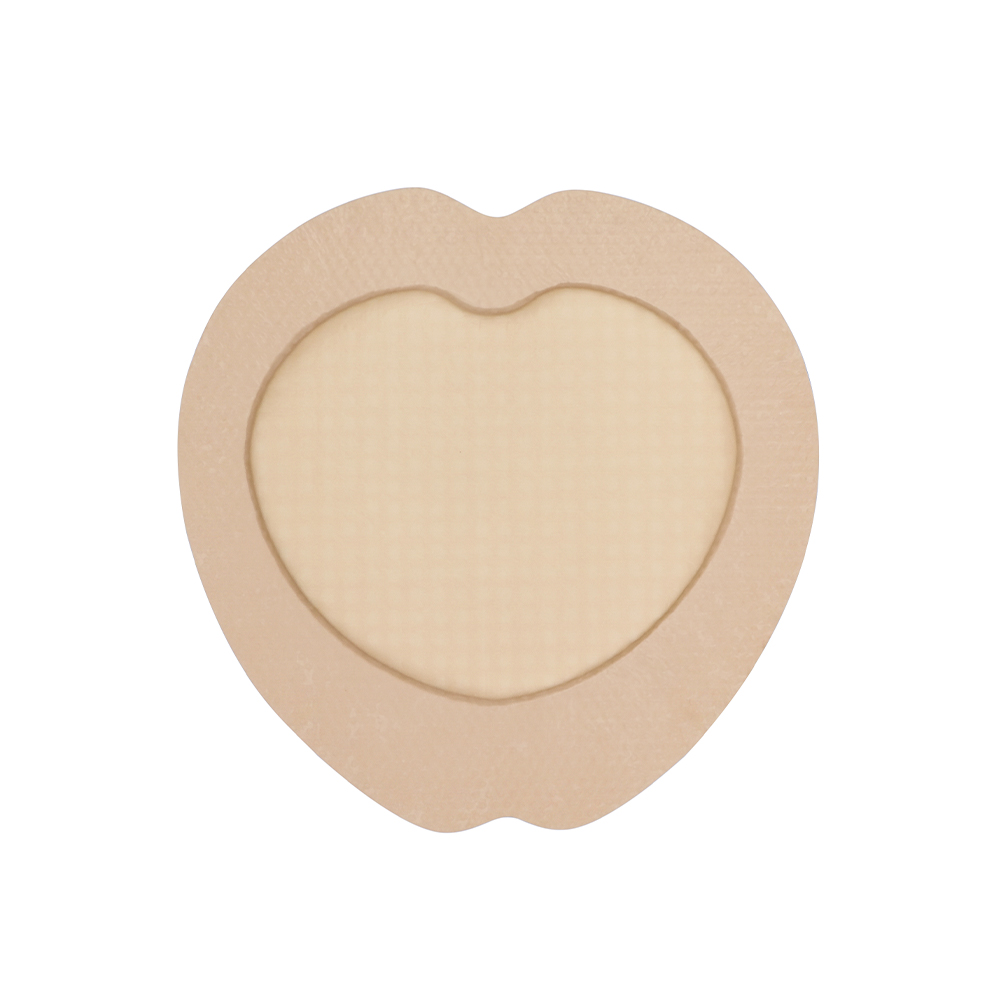 22.5 x 22.5 cm Heart-Shaped Sacral Silicone-Bordered Foam DressingA 22.5 x 22.5 cm heart-shaped sacral foam dressing with silicone border and absorbent pad, suited for sacral wounds needing broad intact-skin anchoring.View Product →
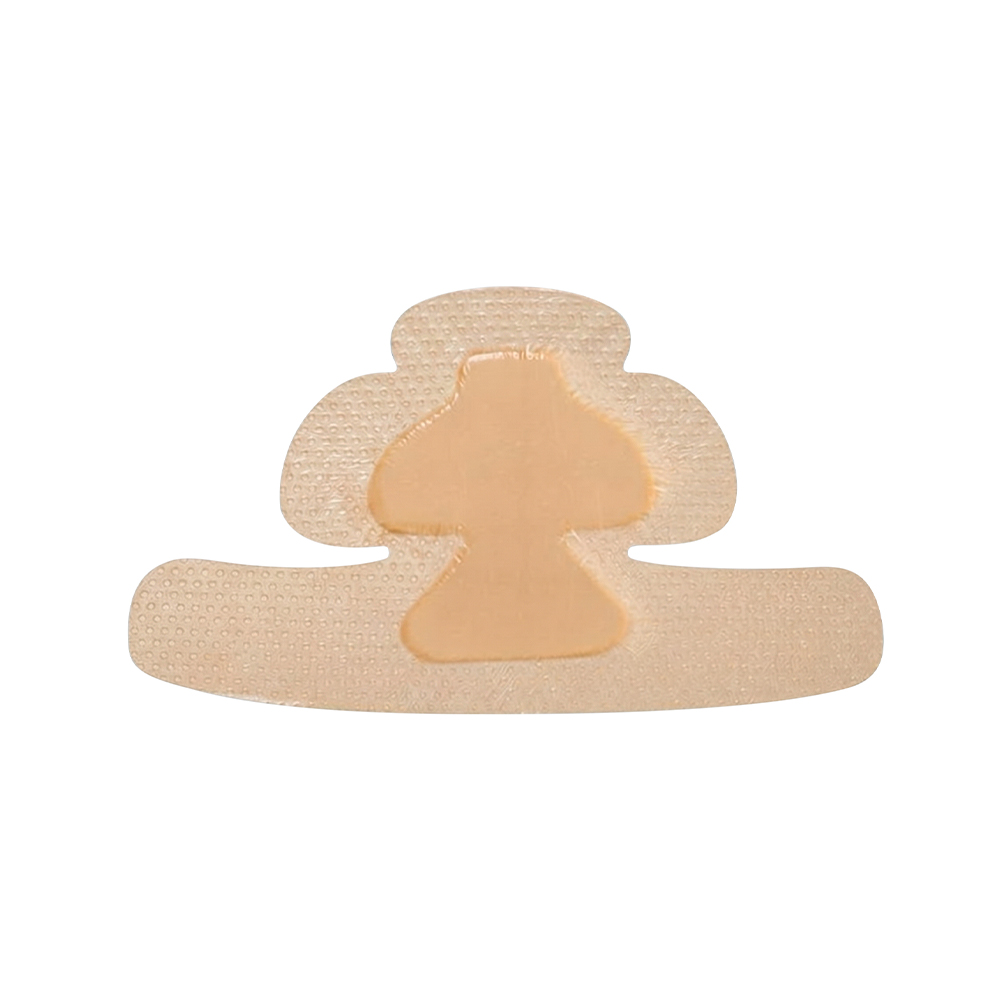
The heel is a different problem. It is small, curved on two planes, and often perfused poorly, which means any additional pressure you add can be more harmful than the injury itself. Ring-shaped or doughnut pads are therefore avoided: they concentrate load at the rim and can reduce blood flow further. A heel-shaped bordered foam dressing instead wraps the curve of the heel from the plantar surface up the sides and over the Achilles region, distributing contact load across a broad, soft surface.
Because the border adheres to the sides of the foot rather than the point of contact, the dressing stays in place during repositioning and ankle movement without straps, which keeps the skin free of extra friction. Long, narrow formats such as a 30 x 10 cm rectangular bordered dressing serve a similar purpose when the wound tracks along the lateral or medial aspect of the heel. Offloading devices remain essential; the dressing manages the microclimate and the interface, not the whole pressure problem.
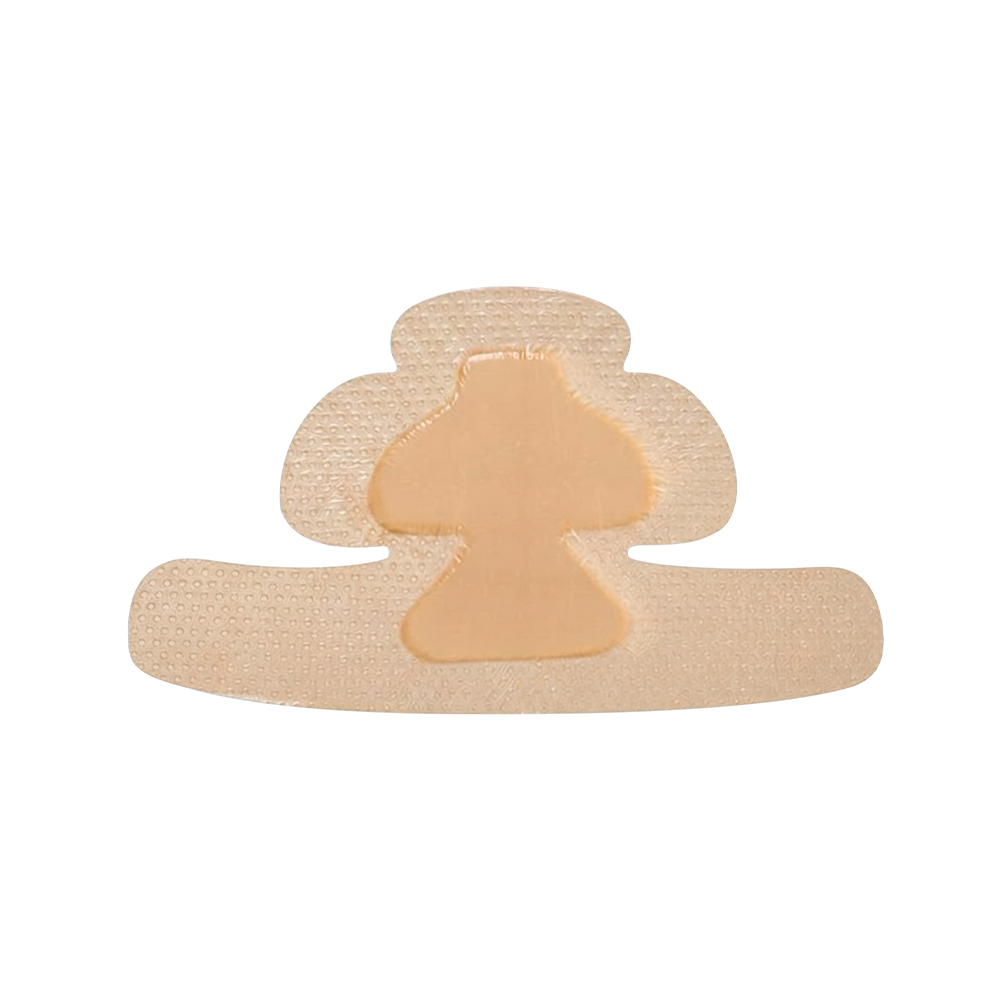 Heel-Shaped 20 x 13 cm Silicone Bordered Foam DressingA contoured 20 x 13 cm heel foam dressing with silicone border and absorbent pad, useful for heel wounds where fit and repositioning security matter.View Product →
Bordered foam dressings are available in a graduated range, from small 5 x 5 cm squares for toes and fingers to large sacral formats. Match the size to the wound and to the body surface, not the other way around.
| Format | Typical use | Notes |
|---|---|---|
| 5 x 5 cm to 7.5 x 7.5 cm | Small wounds, digits, drain sites | Border must still overlap intact skin on all sides |
| 10 x 10 cm to 17.5 x 17.5 cm | General trunk and limb wounds | Most common sizes for shallow pressure injuries |
| Heart-shaped 18 x 18 cm and 22.5 x 22.5 cm | Sacral and coccygeal areas | Split edge follows the gluteal cleft |
| Heel-shaped and 30 x 10 cm | Heel and elongated wounds | Wrap the curve, avoid ring-shaped padding |
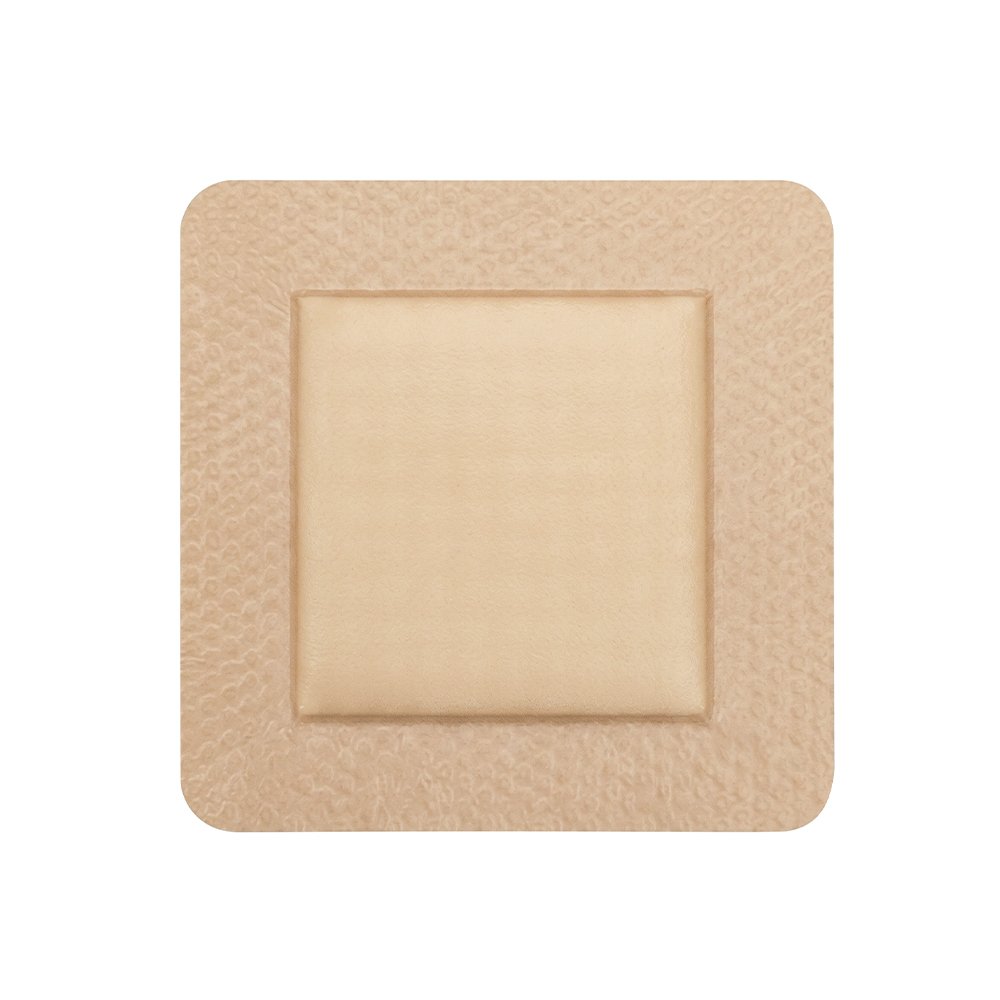
For deep or cavity wounds, a perforated silicone contact layer can be placed beneath the foam to protect the wound bed, while the bordered foam manages exudate and fixation above it. A full silicone foam wound dressing range makes it easier to keep consistent products across wards and home-care programmes.
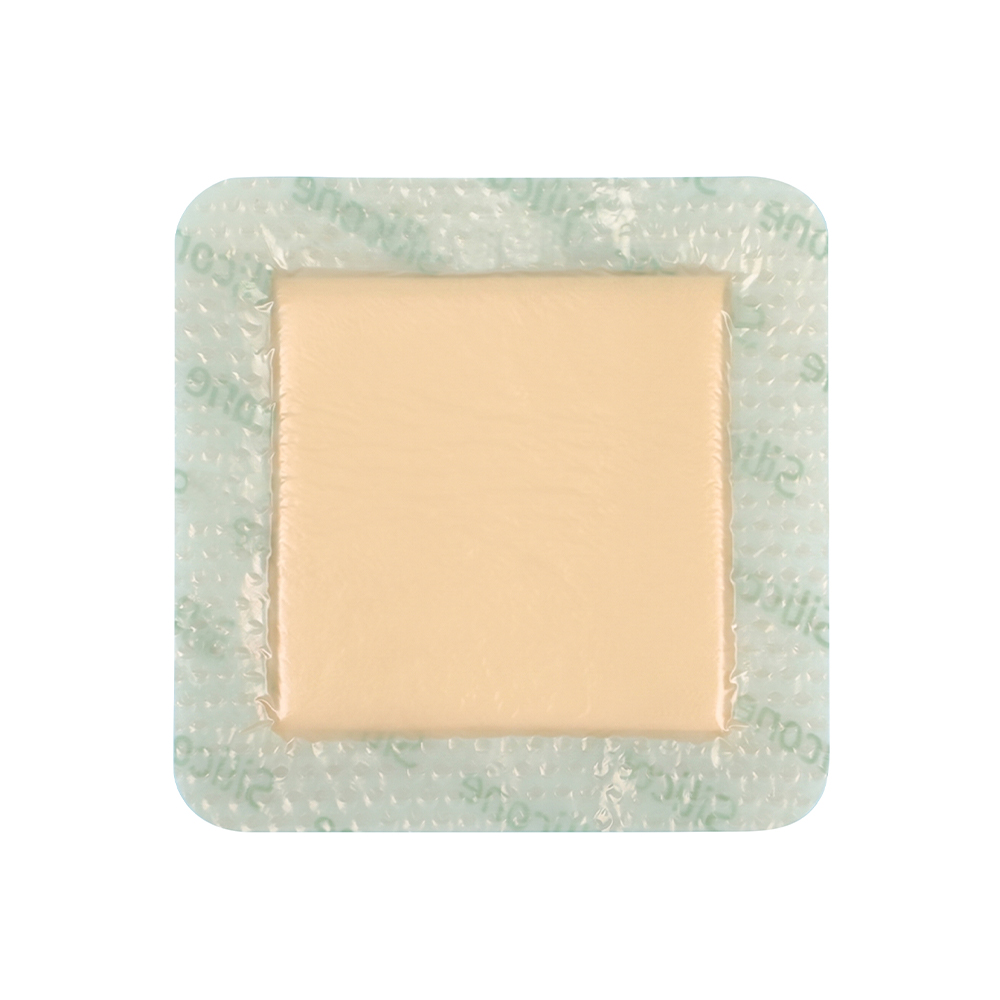
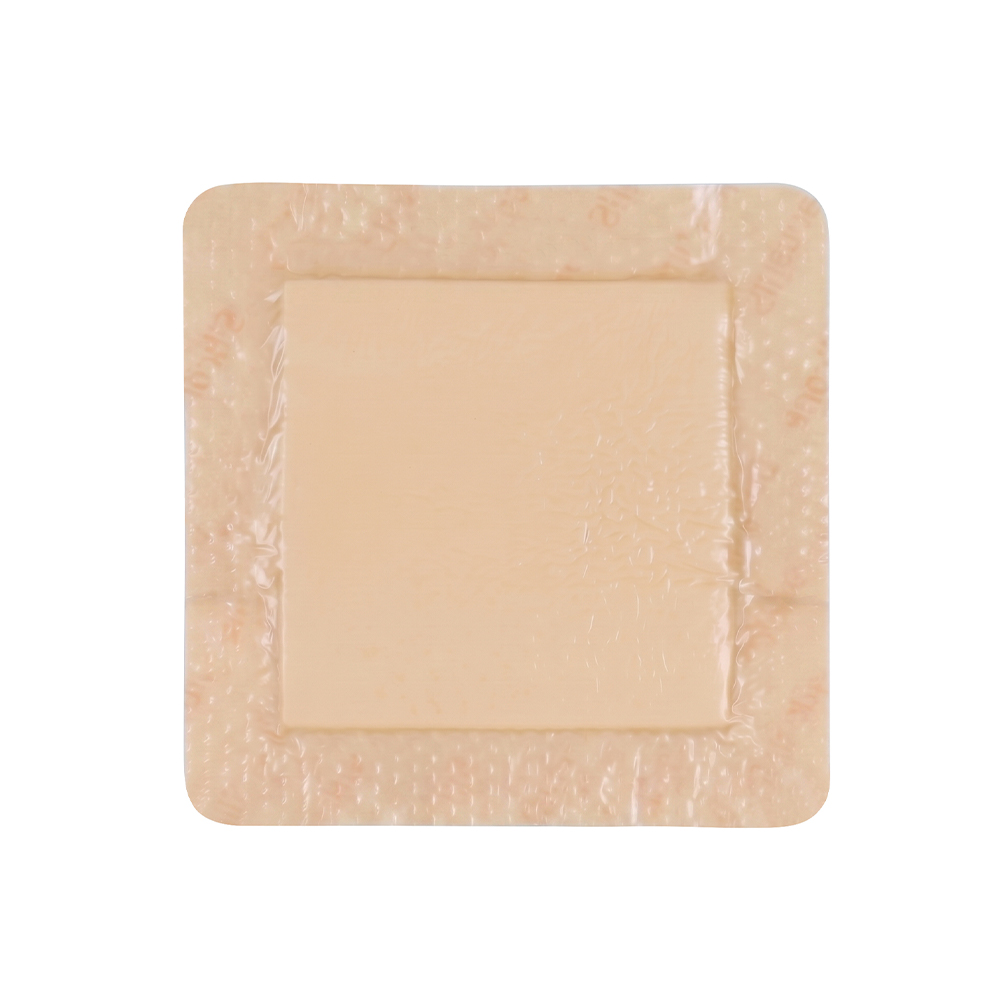
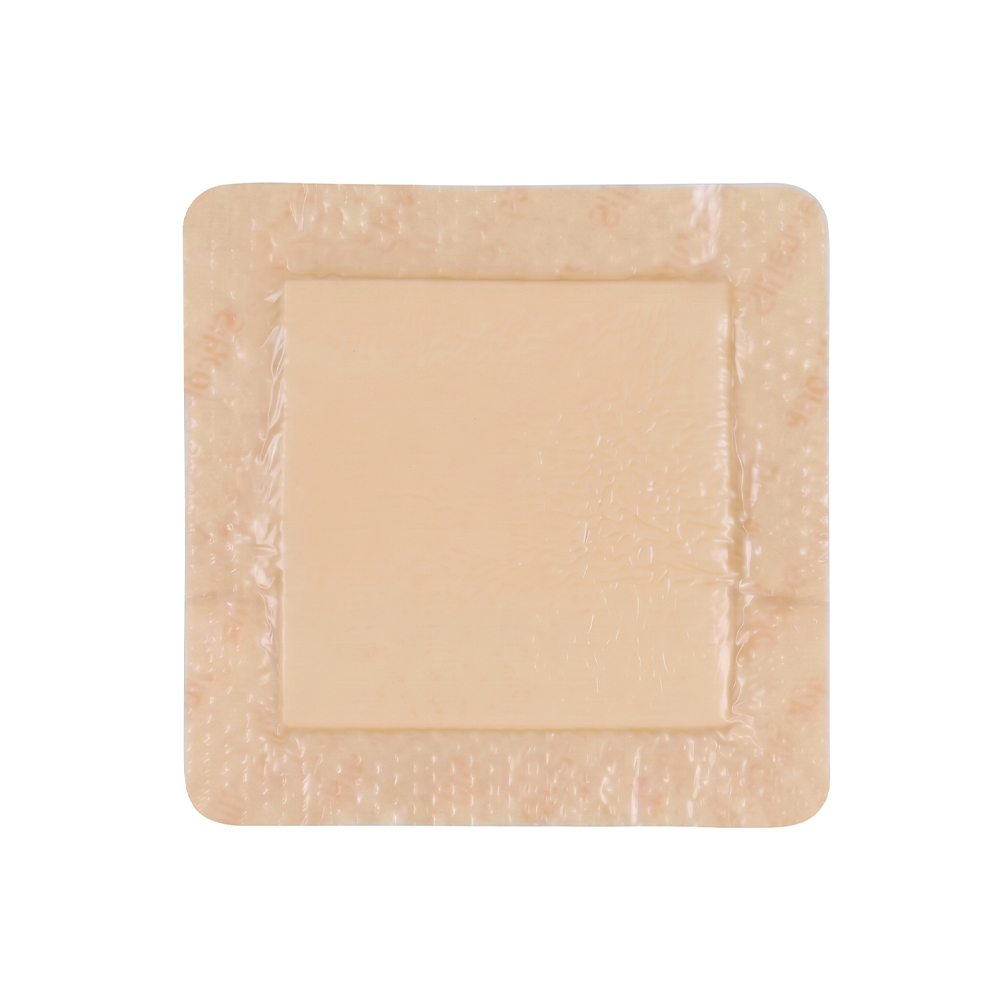 12.5 x 12.5 cm Silicone Bordered Foam Wound DressingA square 12.5 x 12.5 cm silicone-bordered foam dressing with absorbent pad and breathable PU backing for sensitive-skin or frequent-change wound care.View Product →
Depending on exudate volume and the manufacturer's instructions, bordered silicone foam dressings typically stay in place for several days. The border should remain flat and sealed for that whole period; if it lifts, the seal is broken and the dressing should be replaced.
Key point: the first sign of trouble is often the dressing edge rather than the wound. Inspect the border at every shift, and replace the dressing before roll-up, strike-through or leakage begins.
Yes. In prevention, they protect intact but at-risk skin over the sacrum and heel from shear, friction and moisture. In treatment, they manage exudate and support a moist wound bed while protecting the periwound skin.
Cutting the absorbent core can release foam particles and weaken the border seal. Choose a different shape or size instead, or use a borderless silicone foam dressing when custom shaping is genuinely required.
Loosen the border gently while supporting the skin with your other hand, work around the perimeter slowly, and lift towards the wound rather than away from it. Soft silicone adhesives release with far less trauma than acrylic tapes.
No. They reduce local mechanical and moisture stress, but regular repositioning, appropriate support surfaces and heel offloading remain the foundation of pressure injury prevention.
Sacral and heel breakdown is rarely caused by the wound alone; it is caused by what happens at the edges of the dressing. Bordered silicone foam dressings address that boundary directly, sealing out moisture, spreading shear across intact skin, cushioning bony prominences and holding position without straps or tape. Matching the shape to the anatomy, sizing generously and reviewing the border at every shift is what turns a good dressing into a reliable prevention and treatment strategy.
Leading custom medical supplies manufacturers, including a full range of Wound Dressing, Hydrocolloid Medical Products.


Copyright © 2026 by Suzhou Advan Medical Technology Co., Ltd. All Rights Reserved. This website is intended for regions outside China. Approval No:20240008

 Previous