English
 Français
News
Home / News / Industry News / Silicone Foam vs Hydrocolloid Dressings: Exudate Capacity and Painless Removal

Your trusted medical supplies manufacturer.
No. 10 Ousheng Avenue, Pingwang Town, Wujiang District, Suzhou City, Jiangsu Province, China
+86 133 5801 3454
jasonzhangcas@gmail.com
Content
Silicone foam wound dressings and traditional hydrocolloid dressings are frequently stocked on the same shelf, and both are described as moist wound-healing products. In daily practice they answer two different clinical questions. A silicone foam dressing is engineered to move fluid away from a heavily exuding wound bed while staying gentle to fragile skin. A hydrocolloid dressing is engineered to seal a dry or lightly exuding wound and soften devitalised tissue underneath. When clinicians, distributors and procurement teams compare the two, the decision usually narrows to two measurable factors: exudate capacity and how the dressing behaves at removal.
This comparison examines how each material manages wound fluid, where their absorption limits genuinely lie, and what painless removal means in day-to-day wound care.
The two products are built on opposite physical principles. One absorbs and evaporates; the other swells and seals. Understanding that difference explains almost every clinical behaviour that follows.
A silicone foam dressing combines an open-cell polyurethane foam core with a perforated soft silicone contact layer and, in bordered versions, a waterproof outer film. Exudate passes through the perforations and is drawn vertically into the foam matrix instead of spreading sideways beneath the dressing. Because the foam is highly breathable, a meaningful share of the collected fluid leaves the dressing as water vapour, which keeps the periwound skin drier than a fully occlusive product would.
The soft silicone layer is the second half of the design story. It adheres reliably to dry, intact skin but only weakly to the moist wound surface, so the dressing stays in position without bonding to granulation tissue or newly formed epithelium. For a wider overview of this material family, including the wound types it suits best, see this guide to what a foam dressing is used for.
A traditional hydrocolloid dressing is a dispersion of pectin, gelatin and carboxymethylcellulose in a pressure-sensitive polyisobutylene adhesive, backed by a film or foam layer. On contact with exudate, the particles absorb water and swell into a cohesive gel. That gel keeps the wound bed moist and creates the low-evaporation environment responsible for the strong autolytic debridement effect hydrocolloids are known for.
The same occlusive seal is the limiting factor. Once the gel is fully hydrated it cannot hold additional fluid, and further exudate migrates laterally toward the dressing edges. Leakage, edge lift, odour and maceration of the surrounding skin follow quickly when a hydrocolloid is asked to manage more fluid than its structure was designed for.
Published absorption figures vary between brands, so the more useful comparison is behavioural: what each dressing does as exudate volume rises.
| Parameter | Silicone foam dressing | Hydrocolloid dressing |
|---|---|---|
| Fluid handling mechanism | Vertical wicking into open-cell foam; fluid locked in the matrix | Swelling of particles into a cohesive gel |
| Realistic exudate level | Low to high; bordered versions tolerate heavy exudate | Low to moderate only |
| Moisture vapour transmission | High; supports evaporation and limits maceration | Low; acts as an occlusive barrier |
| Behaviour when saturated | Gradual strike-through; structure remains intact | Gel spreads sideways, edges lift, leakage and odour may appear |
| Typical wear time | Guided by exudate level and periwound skin condition | Usually several days on low-exudate wounds |
| Suspected infection | Usable with careful assessment and change frequency | Generally avoided because the seal is occlusive |
| Debridement effect | Hydrates the wound bed but debrides weakly | Strong autolytic debridement on dry, necrotic tissue |
| Skin under the dressing | Breathable; lower maceration risk | Requires close monitoring for maceration |
In short, silicone foam wins on volume and breathability, while hydrocolloid wins on sealing and softening dry tissue. Neither is superior in absolute terms; they simply operate in different exudate ranges.
Removal comfort is largely a question of adhesive chemistry rather than dressing thickness or backing material.
Soft silicone adhesives are hydrophobic. They do not form a true bond with a wet surface, so peel force stays low and relatively constant across the wear period. Lifting the dressing does not drag on the wound bed, does not strip the epidermis and rarely requires solvents or soaking. Comparative clinical reports consistently describe lower pain scores at removal for silicone-based dressings than for traditional acrylic or hydrocolloid adhesives.
Hydrocolloid adhesion relies on a tacky, pressure-sensitive mass that grips dry skin firmly. That grip is an advantage on intact skin and a liability on fragile skin. Removing a fully hydrated hydrocolloid may require steady traction, and it is that traction which patients most often describe as the painful part of a dressing change. Repeated changes on the same site increase the risk of skin tears and contact dermatitis.
Clinical takeaway: when the wound is wet enough to need volume control, or the skin is thin enough to tear, silicone foam reduces both fluid-related complications and removal trauma.
The following patient groups benefit most from an atraumatic contact layer:
When hydrocolloid removal does cause discomfort, gentle measures help: soften the edges with warm saline for a few minutes, use a silicone-based adhesive remover, support the skin with one hand while peeling with the other, and follow the direction of hair growth. Ultrathin hydrocolloid sheets are also easier to remove than thick gel-forming versions.
Most dressing formularies need both products rather than one replacement for the other. The practical selection logic below reflects exudate level, tissue type and skin condition.
Two further points matter in audit and cost reviews. First, a dressing that is changed only because it leaked is usually the wrong dressing category for that exudate level, not a faulty product. Second, exudate volume changes over the healing trajectory, so patients often move from foam to hydrocolloid or film as the wound dries out.
For distributors, first-aid suppliers and hospital procurement teams, the practical question is often whether both product families can be supplied from a single qualified source with consistent documentation.
Suzhou Advan Medical Technology Co., Ltd. (ADVAN Medical) manufactures both categories in Suzhou, China, operating under an ISO 13485:2016 quality system with CE-marked products and an FDA-compliant facility. The wound dressing catalogue is unusually broad for a single supplier, covering foam, hydrocolloid, alginate, silicone contact layers, transparent films, sterile dressings and negative pressure therapy sponges.
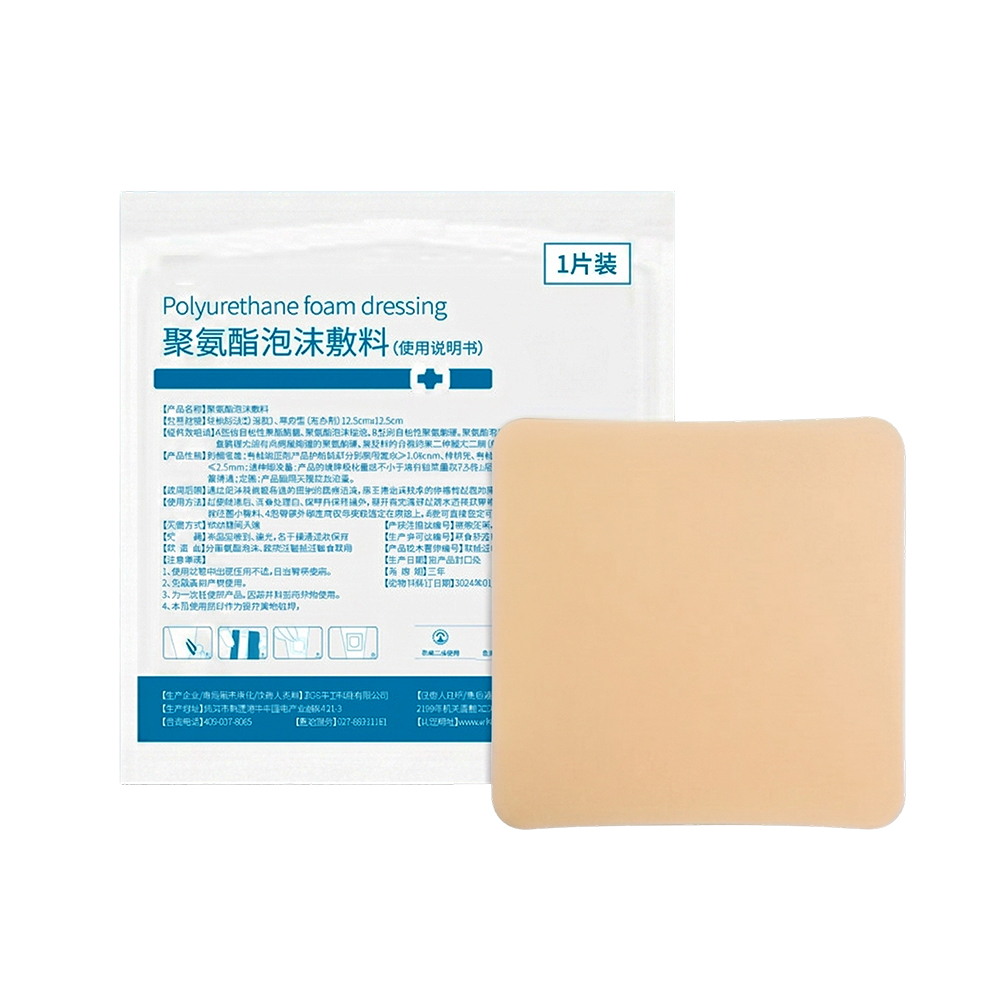
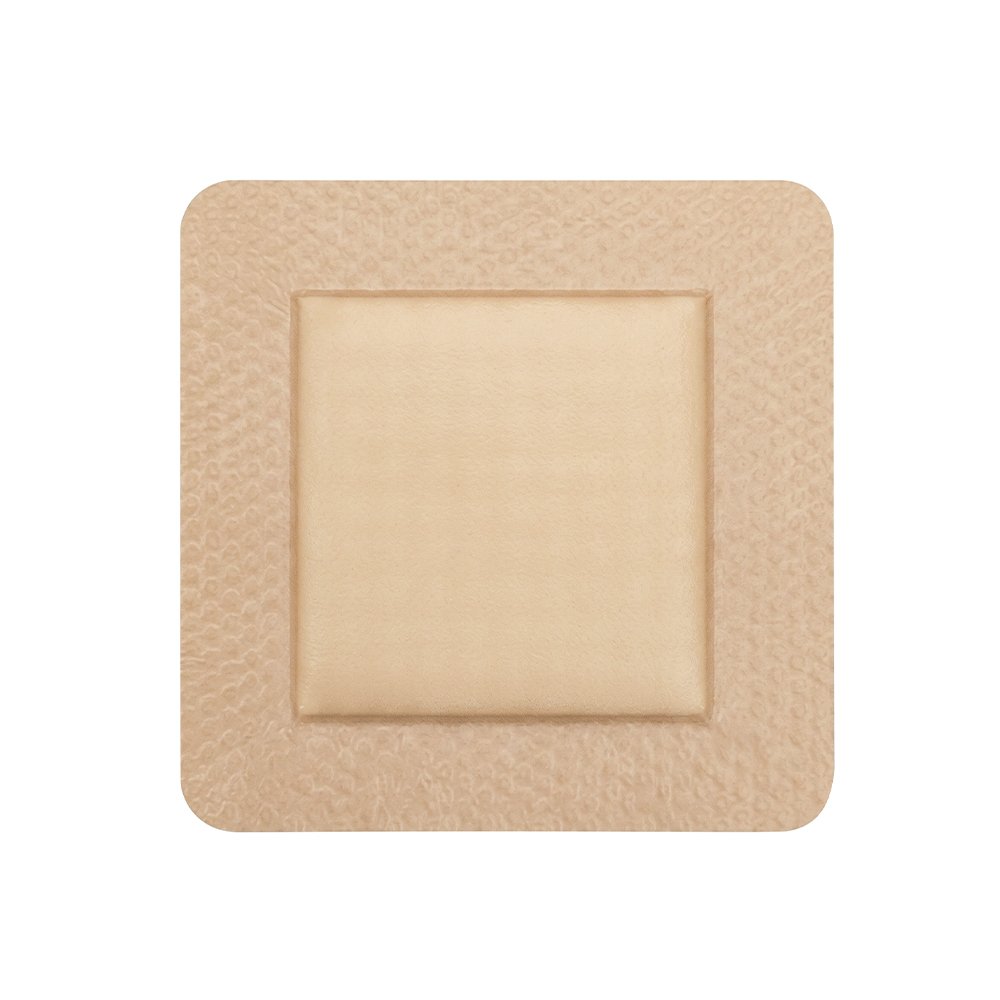
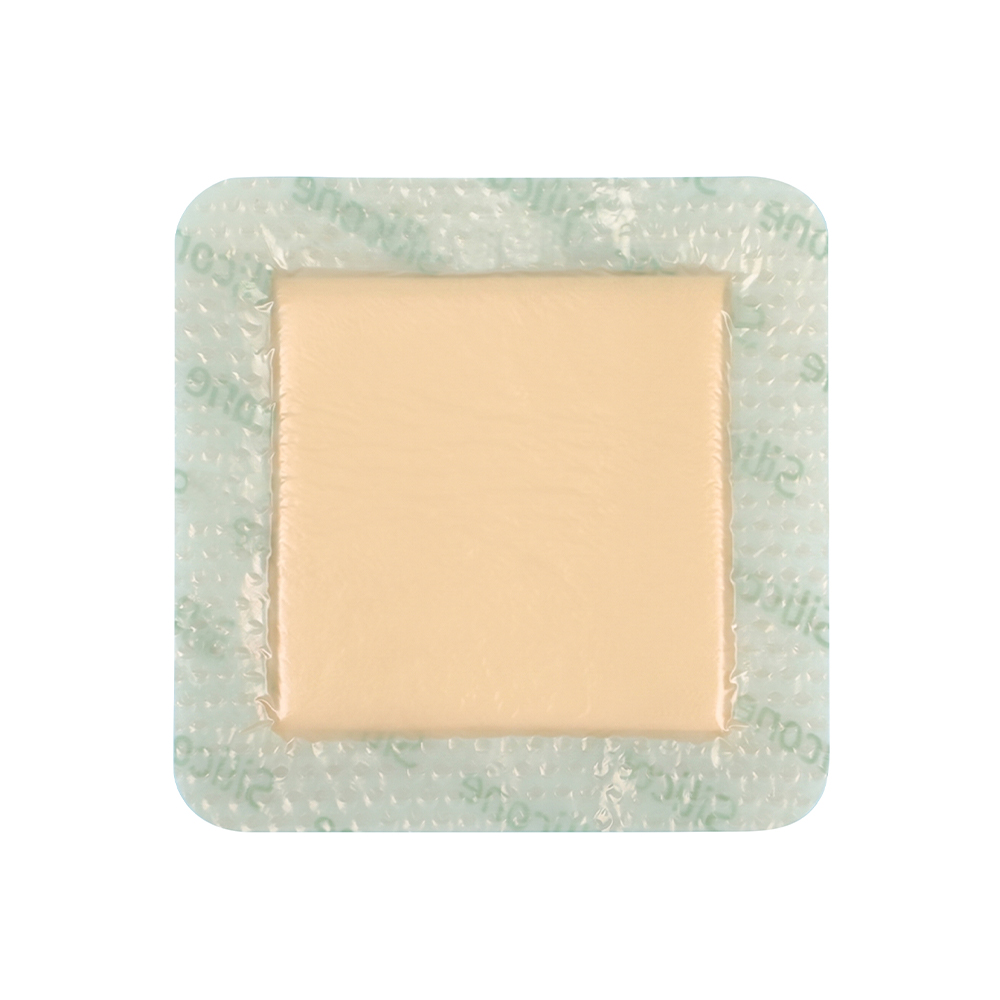 10x10 cm Silicone Bordered Foam Wound DressingPart of a broad silicone foam range, this 10x10 cm bordered dressing manages moderate to heavy exudate and fragile skin.View Product →
The silicone bordered foam range spans 5x5 cm through 22.5x22.5 cm, including heart-shaped sacral and heel-shaped versions, a 30x10 cm long rectangular dressing for elongated wounds, a borderless silicone foam with a peel-off liner, and a split tracheostomy design. Bordered construction with a waterproof outer film makes these dressings suitable for showering and for wounds managed under compression.
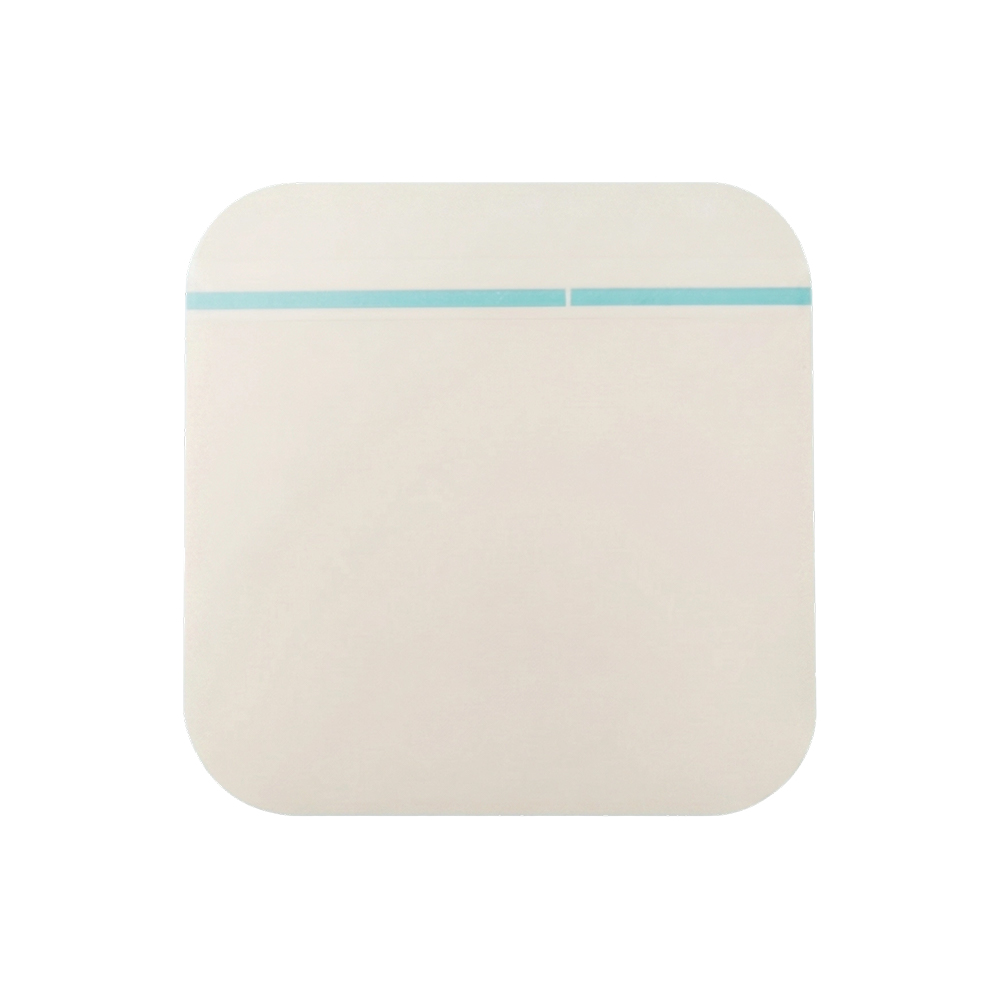 10x10 cm Hydrocolloid Wound DressingMoist-healing 10x10 cm hydrocolloid dressing for light-to-moderate exudate, adding a debriding option alongside the foam range.View Product →
The hydrocolloid line includes 10x10 cm gel-forming dressings and an ultrathin 10x10 cm version, supplied in ten-patch boxes, which gives formularies a debriding option to pair with the foam range. Where exudate is very heavy or the wound bed is fragile, a perforated silicone contact layer can be used as an interface beneath either family.
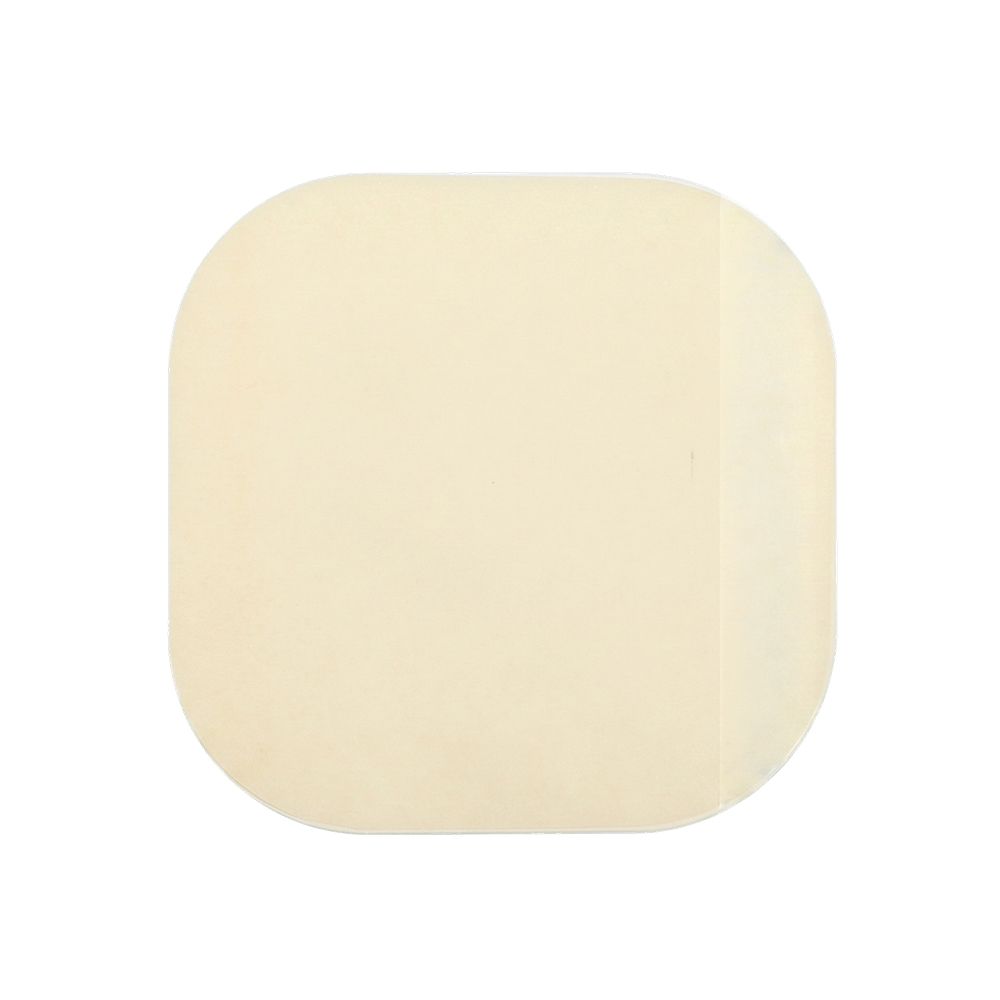
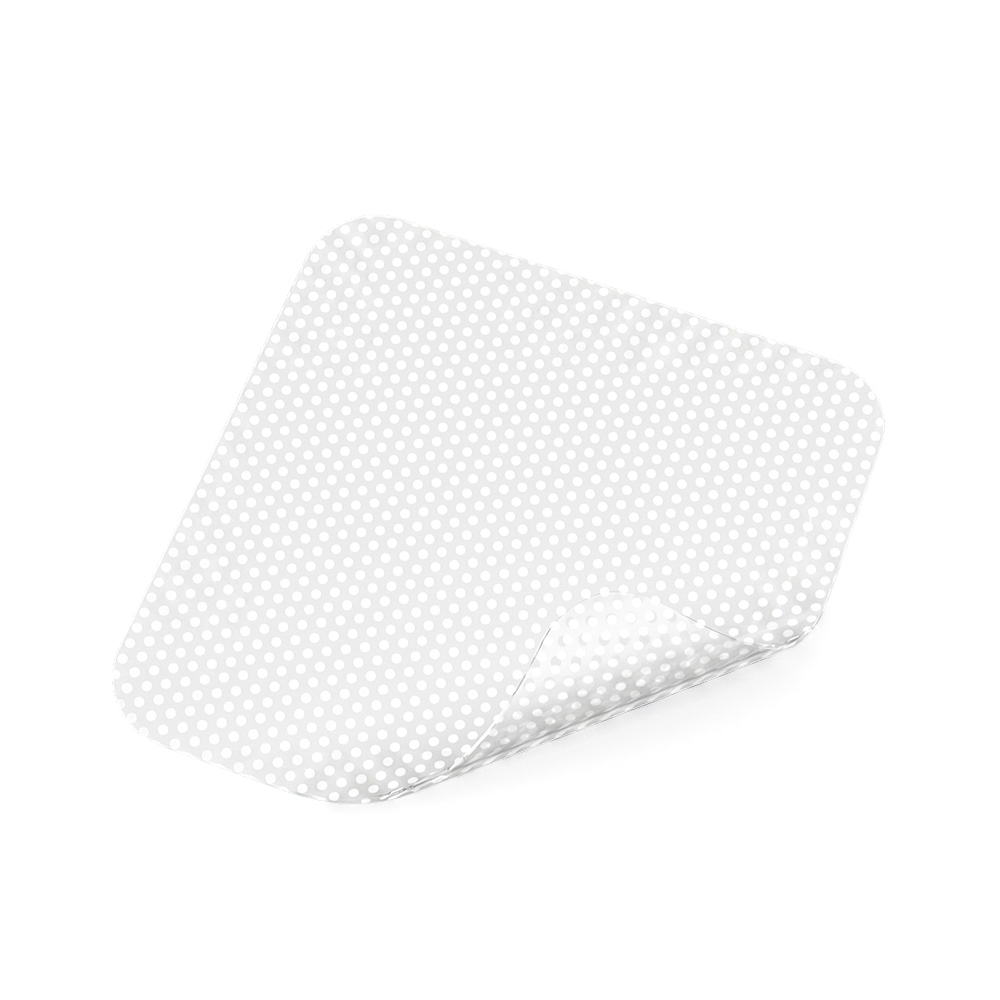 Perforated Silicone Wound Contact Layer DressingPerforated silicone contact layer for fragile or heavy-exudate wounds, usable beneath foam or hydrocolloid dressings and under NPWT.View Product →
All three categories are available for ODM and OEM programmes, with custom sizes, packaging configurations and private-label options. Buyers converting a formulary to silicone-based wound care usually start with the foam range, then add hydrocolloid and contact-layer items to cover the full exudate spectrum.
Generally it should be avoided. The occlusive seal can mask spreading infection and may favour anaerobic organisms. When infection is suspected or confirmed, a more breathable dressing such as silicone foam is usually selected, together with appropriate antimicrobial therapy and more frequent review.
Bordered silicone foam is commonly left in place for three to seven days on moderate exudate. Change it sooner if fluid reaches the edge of the foam, if the seal lifts, or if the periwound skin becomes macerated. Heavily exuding wounds may require daily changes at first.
The unit cost of a hydrocolloid dressing is often lower, but total cost depends on change frequency, exudate level and complications. A hydrocolloid that leaks after one day on a wet wound can cost more in nursing time and consumables than a foam dressing that stays in place for several days.
Silicone foam, because soft silicone adhesion releases with minimal peel force and does not strip the epidermis. This matters most for patients with atrophic skin, on corticosteroids, or undergoing repeated dressing changes.
Yes, in selected situations. A hydrocolloid can provide debridement on a dry area while foam manages a wetter region of the same wound, and thin hydrocolloid sheets can protect intact pressure points adjacent to a foam dressing. Stacking two occlusive layers over the same wound bed, however, should be avoided.
Exudate capacity and removal comfort are the two variables that separate these materials most clearly. Choose hydrocolloid when the goal is sealing, softening and protecting intact skin; choose silicone foam when the goal is absorbing volume, breathing moisture away and lifting the dressing without trauma. Most wound-care programmes need both, and moving a patient from one to the other as exudate falls is normal practice rather than a change of plan.
ADVAN Medical supplies both families, along with the alginate, film and sterile dressing items that complete a wound-care range, from a single manufacturing base with more than two decades of export experience. Browse the full range of medical consumables for global health needs, or submit a specification through the request form for ODM and OEM quotations.
Leading custom medical supplies manufacturers, including a full range of Wound Dressing, Hydrocolloid Medical Products.


Copyright © 2026 by Suzhou Advan Medical Technology Co., Ltd. All Rights Reserved. This website is intended for regions outside China. Approval No:20240008

 Previous